emin@budak ~/blog % cat voxtral-3-voice-agent-stack.md
Voxtral 3: The Voice Agent Stack to Inspect
Voxtral 3 matters because Mistral is no longer treating speech recognition, speech synthesis, and agent orchestration as unrelated API calls. Its new release puts them on the same real-time path. That is the right product boundary for voice agents, but it does not remove the hard engineering work around interruption, state, and tool safety.
What changed in Voxtral 3
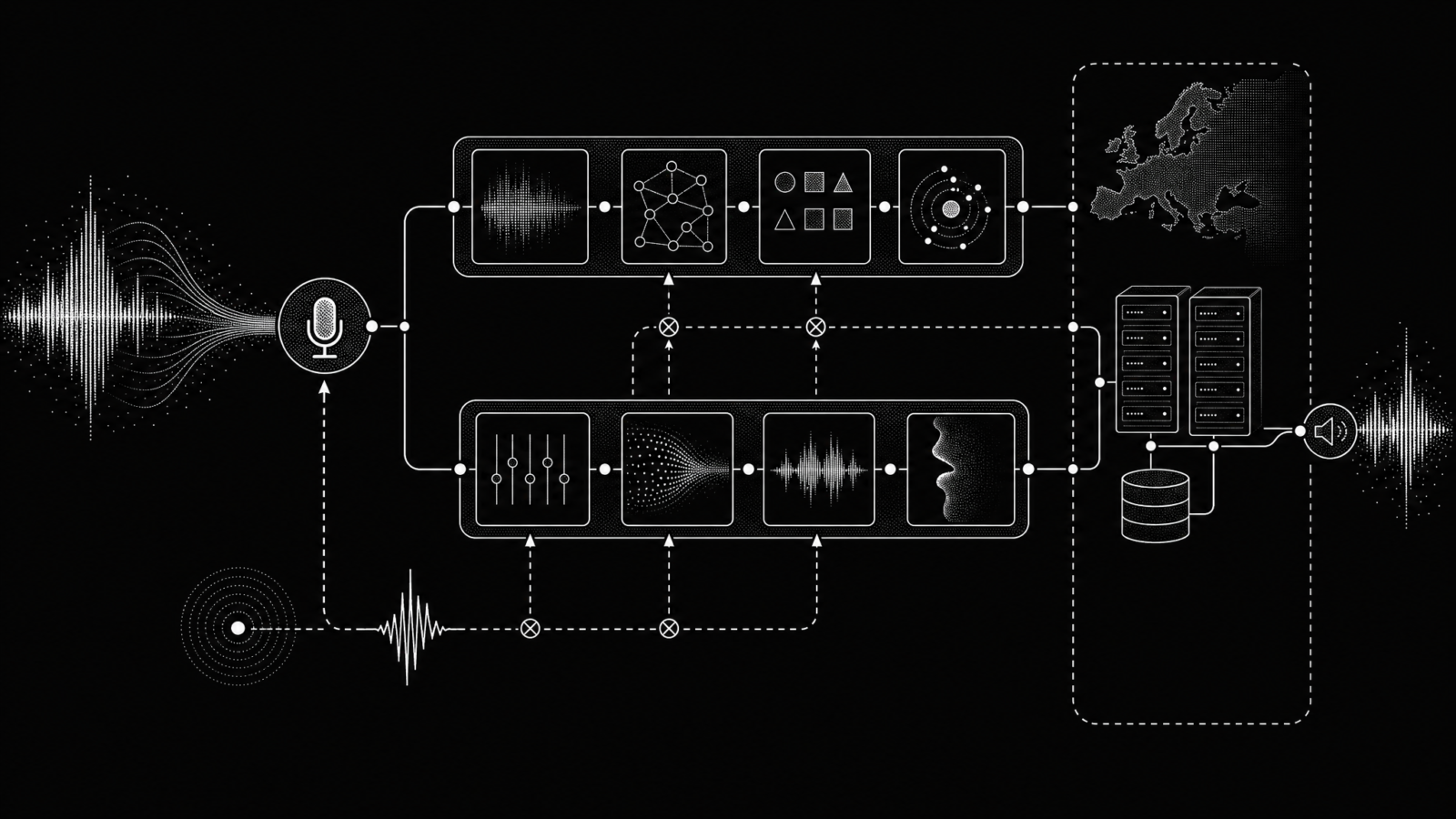
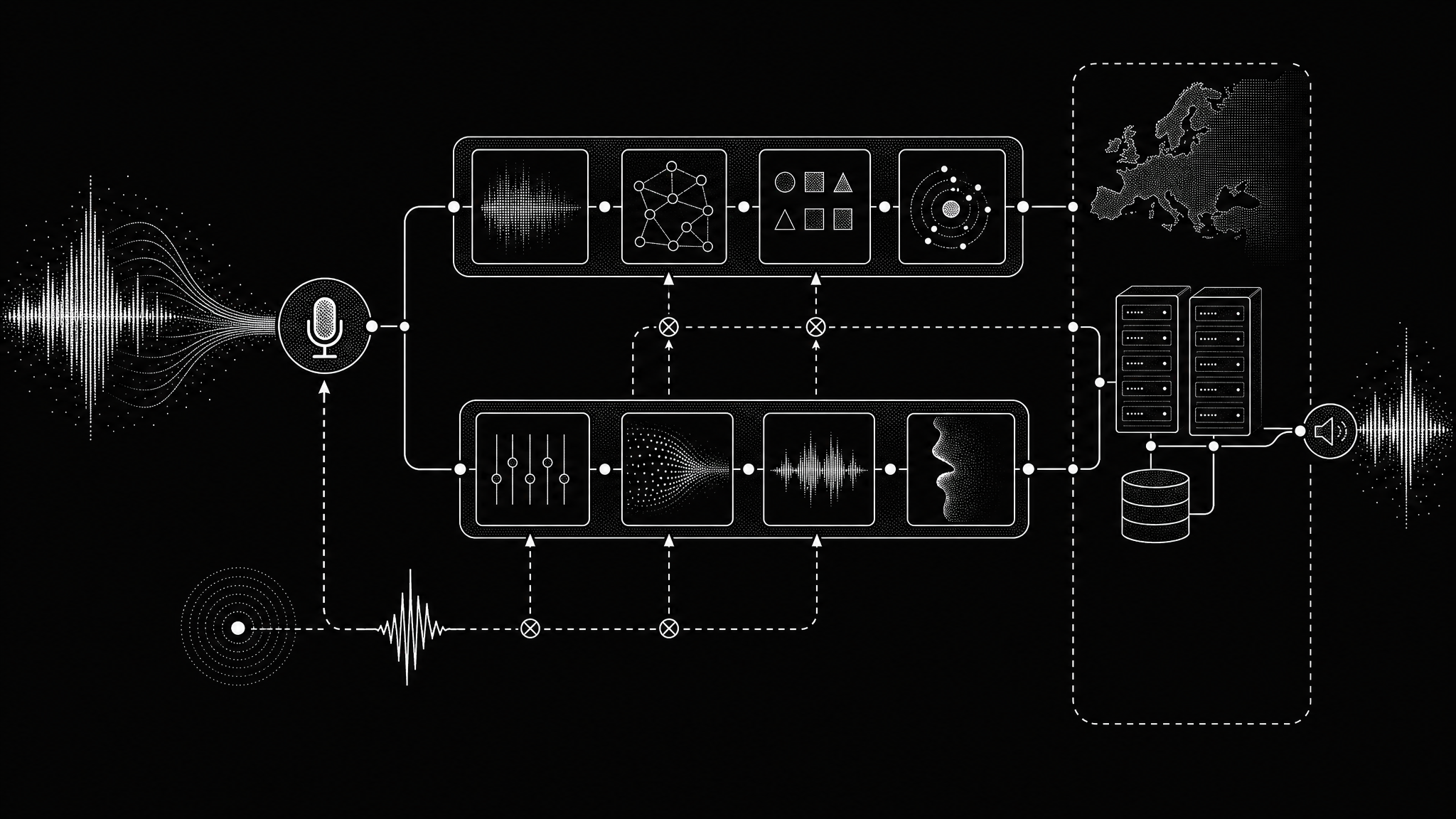
Voxtral 3 is a coordinated audio stack rather than one new model. Mistral’s launch announcement describes batch transcription, real-time transcription, text-to-speech, and a voice-agent SDK. The SDK combines listening, reasoning, tool use, and speech output in one streaming arrangement built on LiveKit.
The individual features are familiar. Speaker labels, timestamps, custom vocabulary, cloned voices, and streaming audio all existed before this release. The interesting change is that the pieces now have a shared turn-taking story. Mistral says the real-time transcriber can detect the end of a turn and that the agent can stop speaking when the caller interrupts. That is where a voice product becomes either usable or maddening.
The official audio documentation makes the split clear. It lists separate models for recorded transcription, live transcription, higher-quality transcription, batch speech generation, and streaming speech generation. A team can still choose different components, but the default architecture is now explicit.
That is a useful contrast with the current rush to wrap a speech-to-text endpoint around a chat model and a text-to-speech endpoint. Those systems work for demos. They often fail on the first interruption because each stage owns a different buffer, timeout, and notion of what the user has said.
Why the Voxtral 3 pipeline matters more than a benchmark
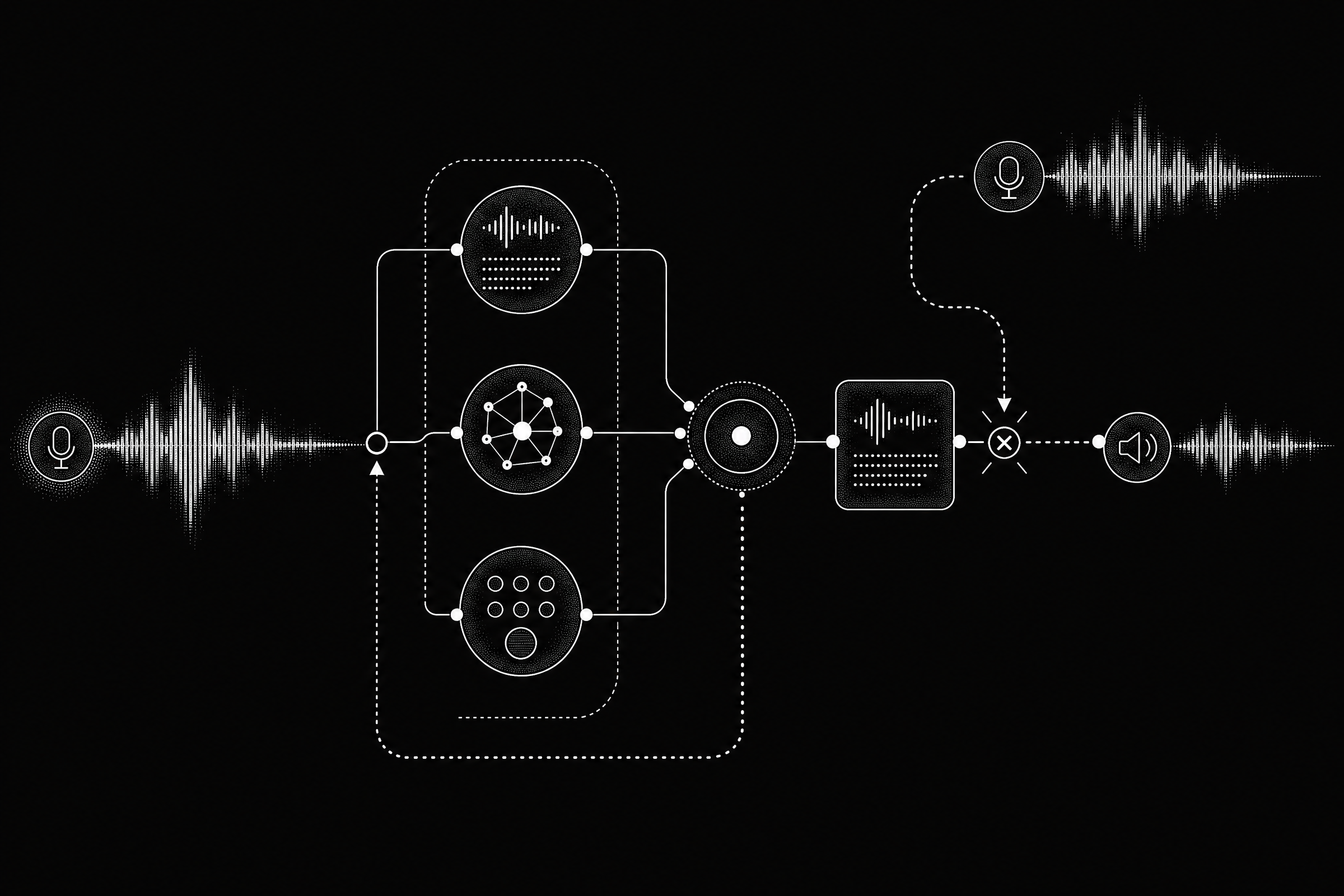
The central claim behind Voxtral 3 is about coordination. A voice turn has several clocks running at once: incoming audio, partial transcription, endpoint detection, model reasoning, tool execution, generated audio, and cancellation. Improving only word error rate does not fix the interaction if the agent keeps talking after the caller has changed direction.
| Stage | What goes wrong when it is isolated | What a coordinated stack can improve |
|---|---|---|
| Speech input | Partial transcripts arrive too late for a fast reply. | Streaming transcription can feed the next stage before the speaker finishes. |
| Turn detection | Silence thresholds cut off a caller or add dead air. | Acoustic and semantic signals can decide whether the turn is complete. |
| Tool call | The agent confirms an action after the caller has corrected it. | Cancellation can reach reasoning and tool execution before completion. |
| Speech output | A queued response keeps playing over the caller. | Playback can stop and resume from the latest state. |
The phrase to inspect is not “single pipeline.” It is cancellation propagation. A well-designed system needs a stable turn identifier, deadlines at each boundary, and an idempotency rule for every tool. If a caller interrupts a booking request, the audio should stop immediately. The booking itself must not become an accidental side effect of a late event.
This is also why an agent SDK can be more valuable than a slightly stronger transcription score. It defines where an application can observe state and where it can cut work off. The reported sub-second turn time is promising, but it is a product claim, not a replacement for a latency trace from a real deployment.
What to evaluate before adopting Voxtral 3
Voxtral 3 deserves a small, hostile evaluation before it gets anywhere near a customer call. The basic demo, a clean question followed by a clean answer, is not the useful test. Test the moments where the user changes their mind.
- Interrupt the agent halfway through a response, then measure how much audio continues and whether the pending action is cancelled.
- Use domain names, product codes, and people with overlapping speech to test vocabulary biasing and diarization.
- Switch languages within one conversation if the product serves multilingual callers.
- Make a tool return slowly, then confirm the system gives a clear status instead of inventing completion.
- Replay the same turn after a network reconnect and verify that a write operation remains idempotent.
The release is especially relevant for teams that care where voice data is processed. Mistral says Voxtral can run through its API or on infrastructure the customer controls. That does not settle a compliance review. It does change the deployment conversation from “which hosted audio API is least awkward” to “which components must stay inside our boundary.”
Independent coverage reached the same basic conclusion as the release: this is a stack announcement, not just a refreshed speech model. What neither the announcement nor the coverage establishes is how it behaves under packet loss, slow business systems, multilingual interruption, and sustained call volume. Those are the numbers I would want before treating the architecture as proven.
The practical reading for voice agents
Voxtral 3 is worth watching because it puts the failure-prone joins of voice agents in one place. The individual models may be competitive, but the engineering value is the attempt to make turn detection, reasoning, tool calls, and speech cancellation part of one design.
I would not replace a working voice stack because of a launch post. I would build one narrow evaluation around interruption and tool safety, then compare the trace with the existing system. The result will say more than a benchmark table. For the broader move toward agents that act before being asked, the questions raised by always-on agents still apply: better initiative only helps when users can understand, correct, and stop the system.
That is the real test for Voxtral 3. Not whether it can speak naturally, but whether it can stop at the right moment.