emin@budak ~/blog % cat ai-agent-economy.md
The AI Agent Economy: What the Giants Leave Behind
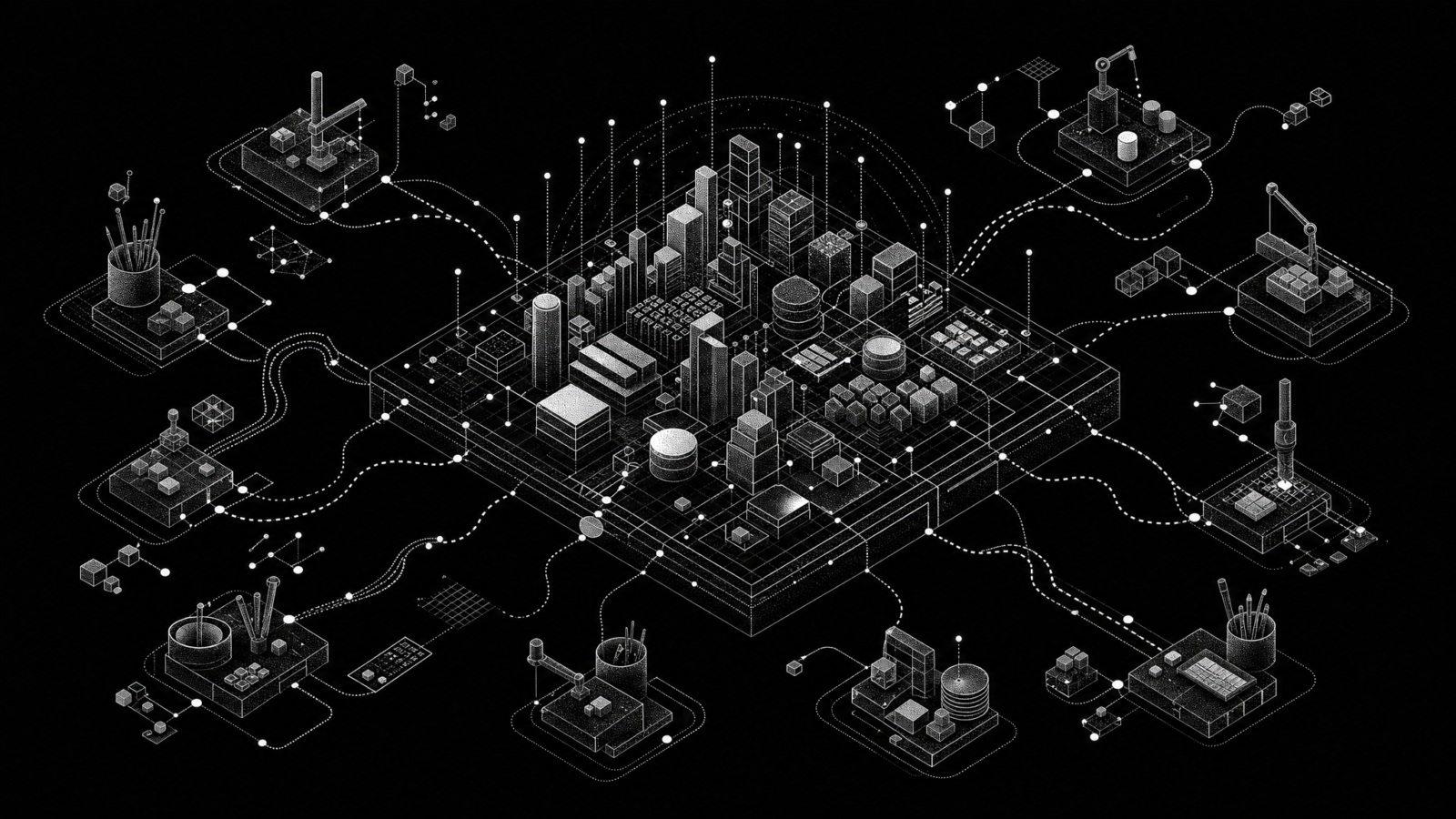
The AI agent economy may look like a story about models and platforms, but I think it will also be a story about the work that appears around them. I have seen this pattern once already. The giants take more territory. Then new jobs, tools, and small businesses grow in the space their success creates.
In Web 2.0, the big social platforms did not stay in one neat lane. They absorbed features that used to support small social networks, local friendship sites, forums, and niche communities. The center of gravity kept moving toward a few large products.
From 2007 to 2009, I ran community and friendship sites for universities. They had forums, homework and lecture-note sharing, and a solid user base. As Facebook spread, I had to shut those projects down. It was not because the need disappeared. It was because one platform became the default place where people already were.
The AI agent economy is following a familiar pattern
At first, the AI story was about access. Models were becoming available to everyone. Now the major platforms are building more of the stack themselves: models, chat interfaces, tools, agent runtimes, search, memory, and business software integrations. I expect a small number of platforms to own a large part of that surface.
That does not mean every company that looks large today will remain large. It rarely works that way. When I meet VCs in San Francisco, one of the first questions I hear is: why can’t the giants do what you are building? The question is useful because it forces you to see the direction of travel. It is also incomplete. A better question is what the giants will make newly necessary.
There is precedent for both outcomes. Meta announced its agreement to acquire Instagram for approximately $1 billion. Its WhatsApp announcement described $16 billion in cash and stock plus $3 billion in restricted stock units for employees. That is the familiar consolidation story. Google, meanwhile, said it would sunset consumer Google+ after concluding it had not found broad consumer or developer adoption. Big companies can gather huge resources and still lose a product race.
I am not trying to predict which model company wins. I am trying to understand what becomes valuable after the platforms have made the basic technology easier to buy.
The AI agent economy creates work around adoption
The social era produced people and firms that helped businesses use the platforms. Social media managers, community managers, influencer marketers, content teams, analytics products, ad automation, and social commerce all became normal parts of a business. The platforms did not eliminate the work. They changed what the work was.
OpenAI’s OpenWorks program made me think about this again. It is recruiting partners to work directly with small businesses on practical AI projects, workshops, and skills. That is not proof of a permanent job category. It is a concrete sign that installing technology is different from making it useful in a real business.
I used AI to brainstorm the lists in this post, then I edited them down to the things I think have a real operational shape. The titles may change, but the underlying work will not.
| Work that grows | What it actually means |
|---|---|
| AI implementation | Connecting approved models, company data, and existing tools to a real process. |
| Workflow design | Deciding where an agent may act, where it must ask, and how a person takes over. |
| Knowledge architecture | Making internal documents, permissions, and source quality usable by an AI system. |
| AI auditing | Checking accuracy, security, access, and compliance after a system is live. |
| Agent management | Watching cost, performance, failures, and the boundary between automated work and human judgment. |
| Training and rights | Teaching teams to use the systems well and handling licenses for generated work, voices, and likenesses. |
None of this is glamorous. That is partly why I think it matters. Businesses do not need a generic agent demo. They need an invoice exception handled correctly, a sales lead routed to the right person, a knowledge base that does not expose the wrong document, and a clear answer when an automated decision goes wrong.
That also connects with something I wrote about agent boundaries. Model output and an external action should not share the same trust level. As agents become more common, the people who can design that boundary well will have useful work for a long time.
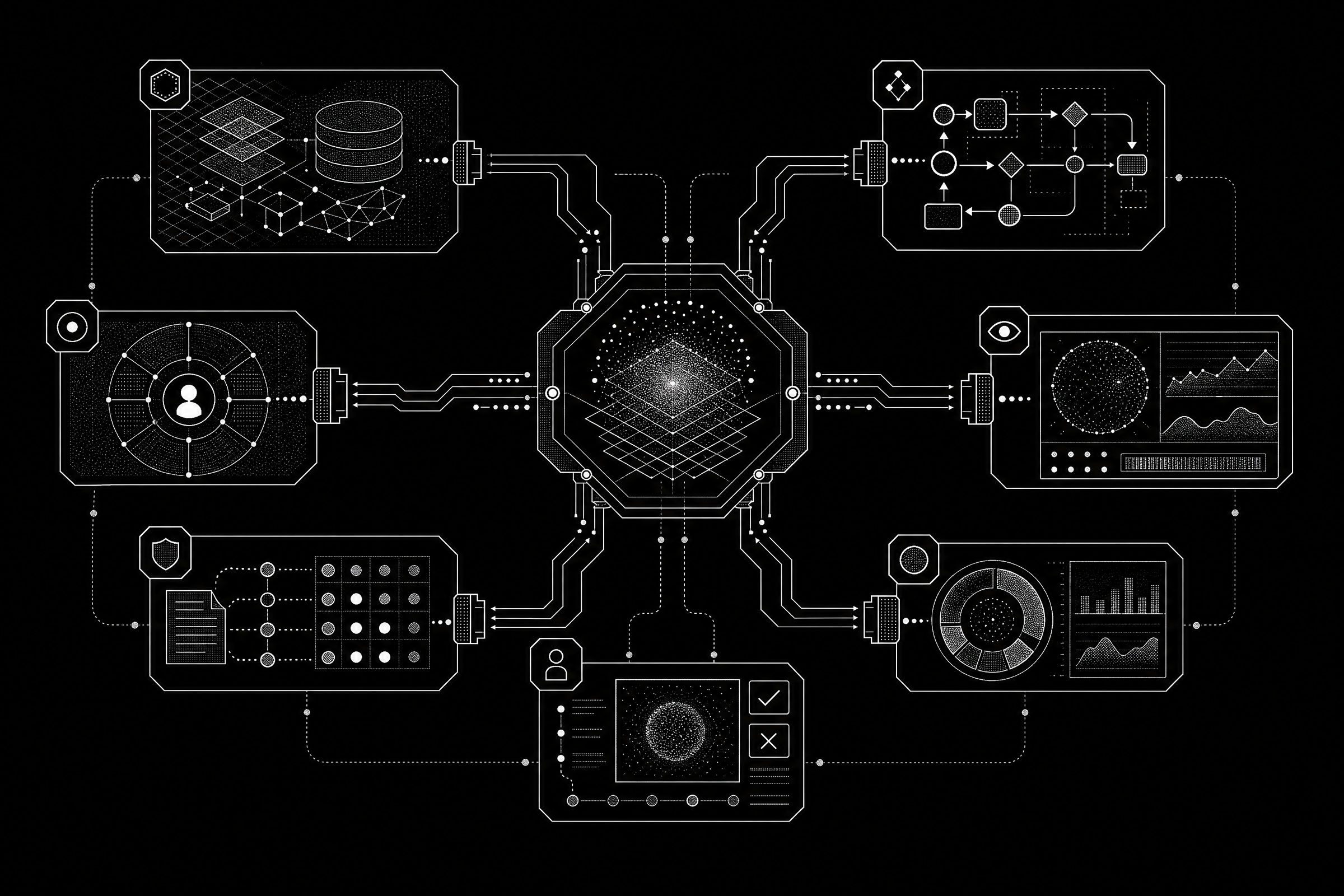
The product space around agents is larger than the agent itself
I also used AI to push on the product side of this idea. Some of these products already exist in some form. Others may be absorbed by platforms. I do not treat a list of ideas as a startup thesis. I treat it as a map of pressure points.
One obvious area is software that runs agents across multiple AI platforms, compares their results, and controls cost. Another is a white-label layer for specialists who set up AI systems for clients and charge a monthly fee. If implementation becomes a service business, someone will build the boring software behind it.
There are also marketplaces for the moments when an AI system needs a qualified human. An agent might identify a tax question, legal issue, design decision, or customer escalation, then send it to the right professional with the right context. The hard part is not the handoff screen. It is identity, liability, permissions, quality control, and payment.
Financial rails will matter too. An agent that can spend money, order inventory, or book a service needs a digital identity, scoped authority, a budget, and a record of what it did. So will products that manage data access and sensitive information across connected systems. These are not side features. They are the conditions that let an agent move from a suggestion to useful work.
I am also watching visibility and verification. Retailers will want their products to be found and compared by AI shopping assistants. Brands will want to know when AI systems recommend them, and against whom. Artists, writers, and voice actors will need better ways to license work and digital likenesses. People will need a way to understand where generated images, video, and audio came from. The need is broader than model output. It is about trust in the chain around the output.
Games and learning may change too. I can imagine multiplayer worlds where characters remember players and stories diverge, or training products that let someone practice a sales call, an interview, customer support, or a language conversation with a realistic simulation. The interesting question is not whether a model can generate a scene. It is whether the product gives people a reason to come back.
I am looking past what the giants cannot do today
It is tempting to build only around a missing feature in a large platform. Sometimes that works. But the safer place to look may be the need created by the platform doing its job well. Web 2.0 closed many small doors. It also created whole categories of work that would have sounded strange a few years earlier.
The AI agent economy will probably do the same. Four or five very large platforms may end up controlling much of the obvious surface. I do not see that as the end of opportunity. I see it as the beginning of a more practical layer: people who set up the systems, people who supervise them, and products that make them safe, legible, affordable, and useful.
I am spending more time thinking about that layer. The most durable businesses may not compete with the platforms head-on. They may grow because the platforms made a new kind of work unavoidable.