emin@budak ~/blog % cat lfm3-local-agents.md
LFM3 Local Agents: The Surprising Small Model Bet
LFM3 local agents are Liquid AI’s argument that a small model can own more of an agent loop than most teams expect. The new open-weight family puts text, vision, audio, omni, and decision models on a shared 1.7B-parameter backbone. That is interesting. The sharper claim is about deployment: use a specialized model close to the device, keep retrieval and policy outside it, and stop paying a large-model tax for routine agent work.
Contents
- What changed in LFM3
- Why the architecture matters
- Where LFM3 local agents fit
- What the benchmarks do not settle
- A sensible deployment shape
What changed in LFM3?
LFM3 local agents get six related models instead of one general-purpose checkpoint. Liquid AI released a text model, vision model, audio model, omni model, and two decision variants. The text model has 1.73B parameters and a 256K-token context window. The family is open weight, so teams can inspect the weights, select a runtime, and adapt a model to a narrow task.
The release matters because it pushes against a common agent design habit. Many systems begin with the largest hosted model that fits a budget, then add tools, retrieval, and guardrails around it. That can work, but it makes every classification, routing, extraction, and simple tool decision expensive. LFM3 suggests a different split: give the small model a constrained job, then let a larger model handle the cases that need broader knowledge or deeper reasoning.
The release announcement reports six models around the 2B class, trained from a shared base. The accompanying model card is more useful than the launch copy. It explicitly says the text model is not recommended for complex multi-step reasoning or agentic coding. That caveat is the point. A small model becomes practical when it is allowed to be small.
Why does the tri-hybrid architecture matter?
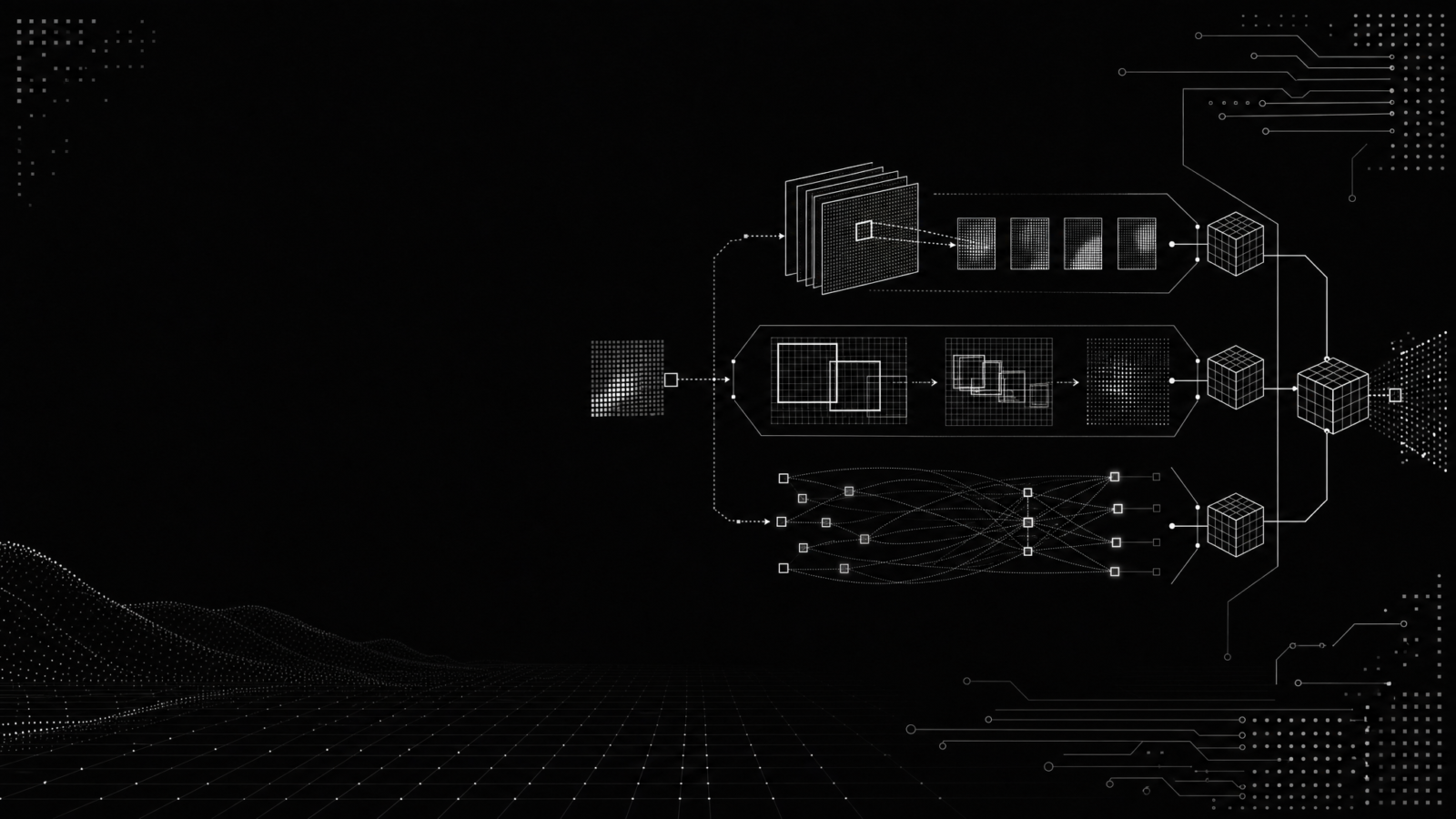
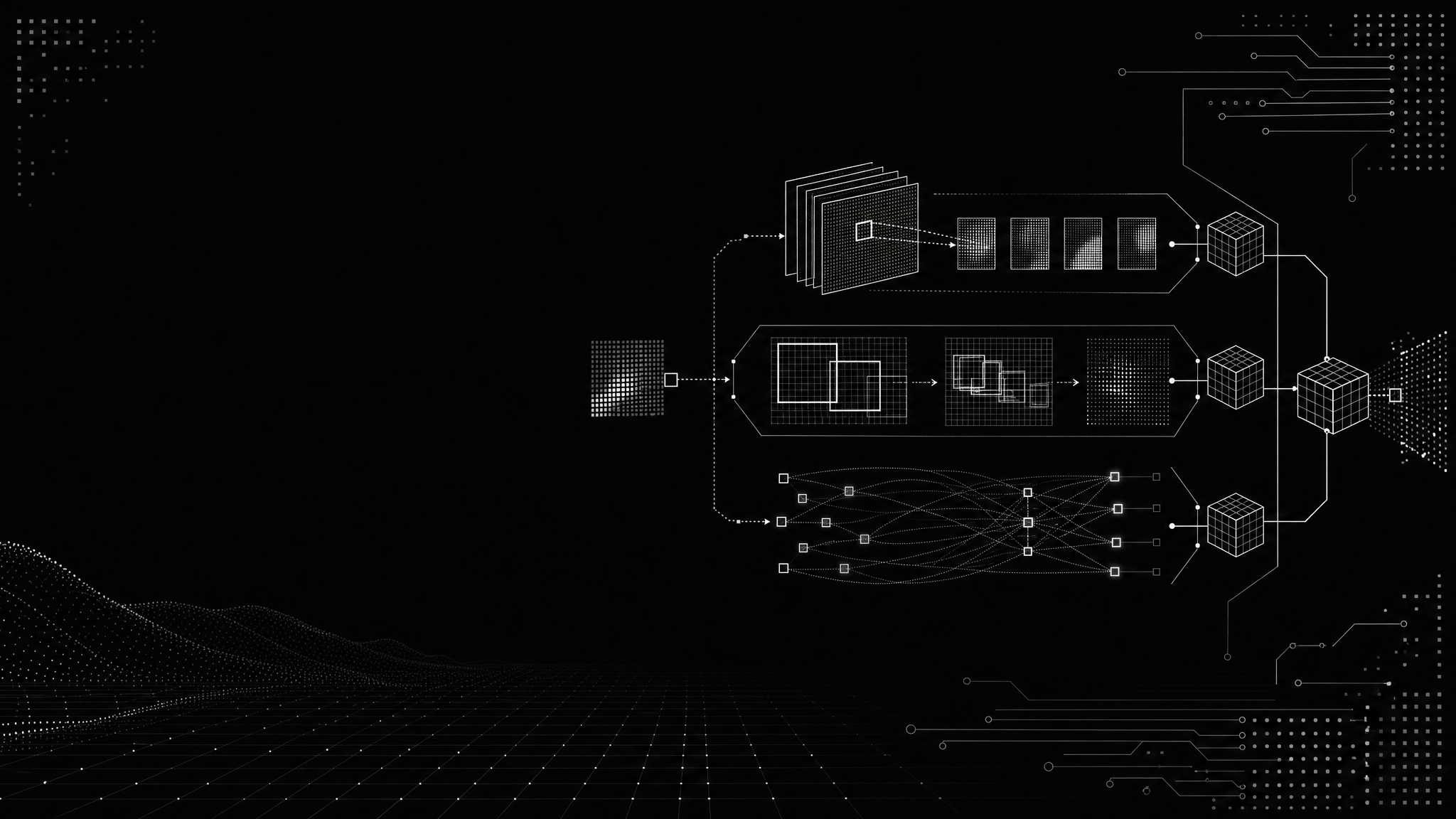
The architecture is a mix of gated short convolutions, sliding-window attention, and global attention. The text checkpoint has 24 layers: 13 convolution layers, five sliding-window attention layers with a 256-token window, and six global attention layers. Each component has a different job. Convolutions handle local patterns cheaply. Sliding-window attention keeps nearby context available. Global attention preserves a path for long-range dependencies.
This is not magic. It is an engineering trade. Full attention gives a model broad context access, but it costs more as prompts grow. A hybrid design spends most of its work on local structure and reserves global attention for fewer layers. Liquid AI says LFM3-1.7B is about 25 percent faster than LFM2-1.2B at an 8K-token context on its edge tests. That is a vendor measurement, not an independent result, but the design choice is credible and worth measuring in a real workload.
Where do LFM3 local agents fit?
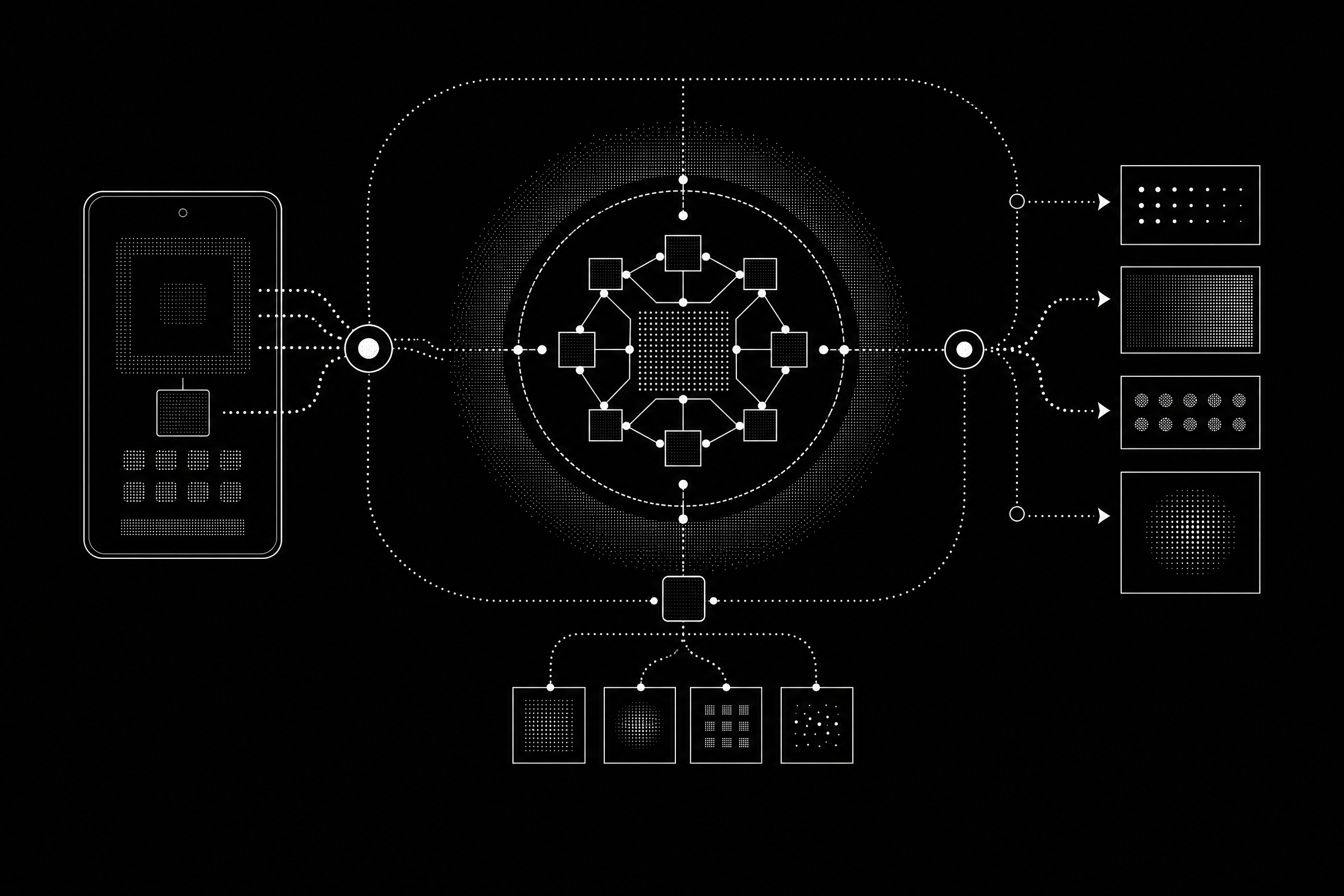
LFM3 local agents fit jobs with a narrow action space and a clear success test. Tool selection from a small catalog, document classification, structured extraction, inbox triage, and routine approval routing are good candidates. The text model supports tool calls and deferred tool loading, which matters when an agent does not need every schema in its prompt.
That last detail deserves attention. Tool definitions consume context and create failure modes. A local router can first decide which small set of tools applies, then hand only those schemas to the next turn or another model. This reduces prompt size and gives a system a clean place to apply allowlists. It also separates planning from execution. The model proposes an action. Code validates arguments, enforces policy, runs the tool, and records the result.
The model card claims roughly 1 GB at 4-bit precision. That changes the deployment conversation for LFM3 local agents. A laptop or edge device can host a private first-pass model without shipping every token to a remote API. It does not eliminate server inference. It can reduce it. The useful question is not whether a 1.7B model replaces a frontier model. It is how many requests do not need the frontier model in the first place.
What do the benchmarks leave unresolved?
Liquid AI reports strong tool-use and browser-task results against several small models, while larger models remain ahead on coding and knowledge-heavy work. The comparison is informative, but it is not a deployment decision. Benchmark harnesses fix tool sets, prompts, recovery behavior, and scoring. Production systems rarely do.
Three risks remain. First, a long context window does not guarantee useful recall over a long, messy task history. Second, tool calling can look good in a fixed benchmark while failing on ambiguous arguments or partial tool errors. Third, local inference moves some operational work back to the team: quantization choice, runtime compatibility, memory pressure, telemetry, and update management.
There is also a licensing check. The checkpoint uses the LFM Open License v1.0, so legal and product teams should read it before treating the weights as interchangeable with permissively licensed alternatives. Open weights are valuable, but the license still defines the boundaries.
What is a sensible way to deploy it?
A practical LFM3 local agent design has four layers:
- A local model classifies the request, extracts fields, and chooses from a limited set of actions.
- Application code validates the structured output against a schema and applies policy before any side effect.
- Retrieval supplies current facts when the task needs them, rather than asking a small model to invent missing knowledge.
- A stronger remote model receives only escalations: unclear intent, long-horizon planning, difficult code changes, or failed recovery.
This pattern resembles the case made by local inference deployments: model size is only one part of the cost and reliability picture. Context, batching, tool latency, retries, and human review can dominate the system people actually experience.
LFM3 local agents are not a replacement for capable general models. They are a credible reason to stop using those models for every turn. Test them on a bounded workflow, log abstentions and escalation rates, then compare the whole system rather than a single benchmark score.