emin@budak ~/blog % cat local-qwen-inference-125b.md
Local Qwen Inference: Why 125B Is a Trap
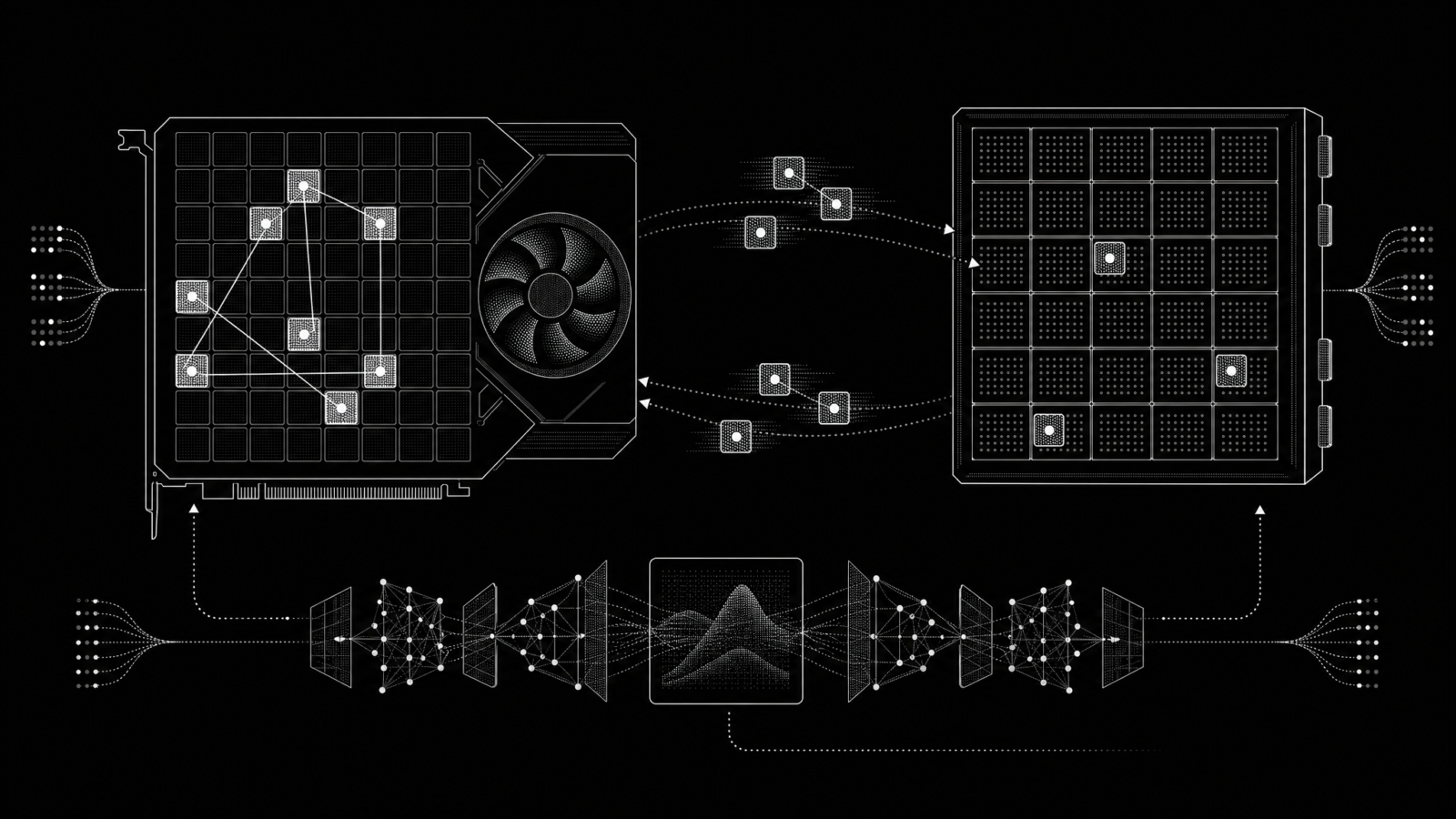
Local Qwen inference just got more interesting, but the 125B number is still a bad buying guide. A new community runtime called Strata claims it can run Qwen3.8-Flash-Next on a PC with a 12 GB GPU and enough system RAM. That is a useful engineering result. It does not turn a workstation into a small datacenter.
Local Qwen inference now has a more practical path
The interesting development is not that somebody put a large model on a gaming PC. People have been doing that for years. The interesting part is that the path has become specific enough to evaluate: a documented model, a published memory plan, named hardware, and reported measurements.
Qwen3.8-Flash-Next is an open-weight preview with 125B total language-model parameters, although it activates 6B parameters per token. It also carries a 51B n-gram embedding component. Those numbers explain both the appeal and the confusion. Sparse activation can reduce compute for each generated token. It does not make the complete artifact disappear from memory.
Strata takes a pragmatic approach. It keeps frequently used model parts close to the GPU, holds more in RAM, and relies on a compressed model format and speculative work to hide some of the transfer cost. Its published minimum is a 12 GB NVIDIA or AMD card, 32 GB RAM, roughly 80 GB of free disk, and Windows or Linux. That is approachable for a developer workstation, but it is not a lightweight install.
Why a 125B model can run on a smaller GPU
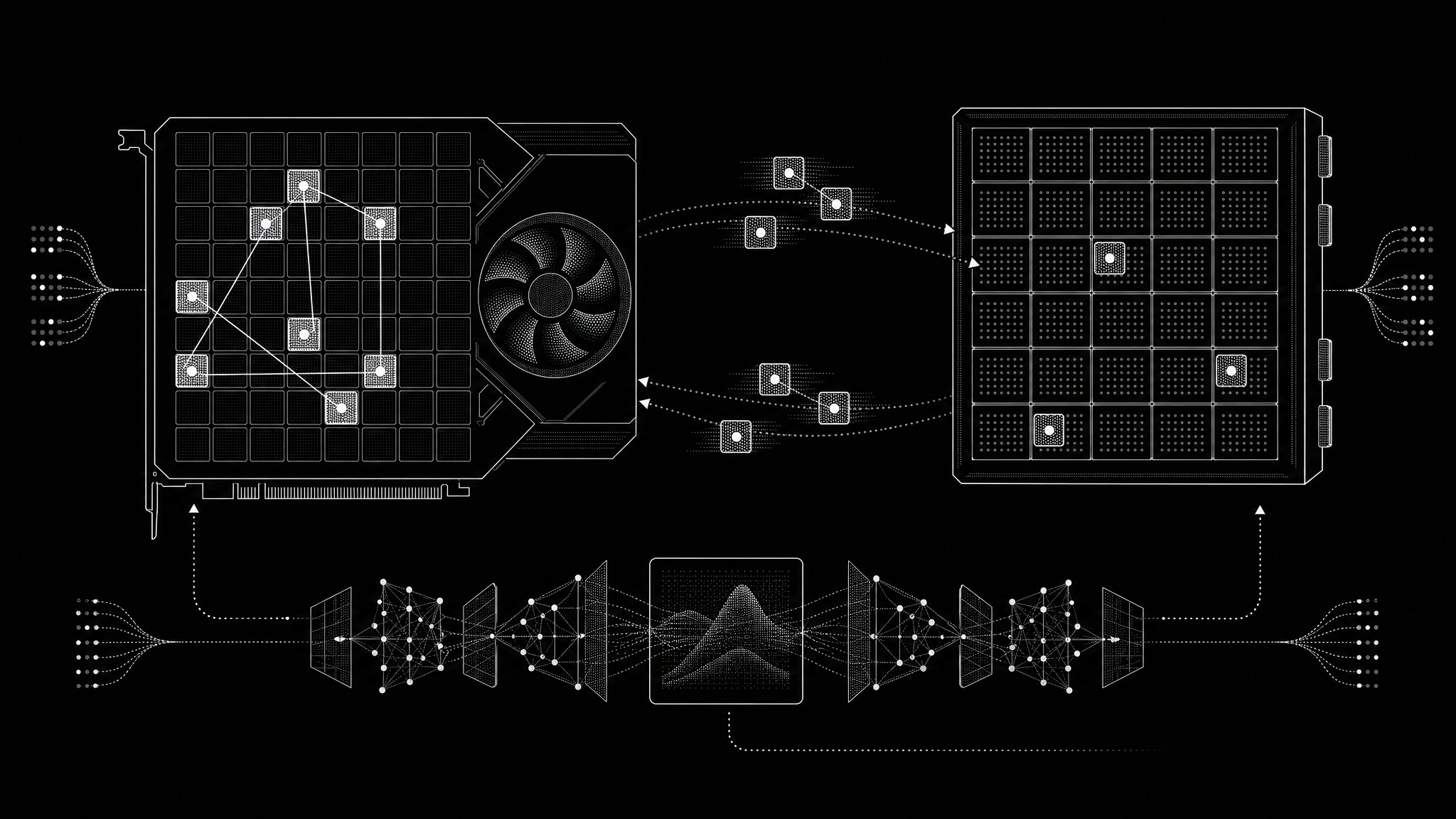
The headline becomes less mysterious once the storage layers are separated. Local Qwen inference does not place every model weight in VRAM. Qwen’s mixture-of-experts design selects a small subset of experts for each token. Strata then treats VRAM, RAM, and SSD as different tiers rather than pretending the GPU owns the full model.
| Layer | What it is good at | What can go wrong |
|---|---|---|
| GPU VRAM | Hot experts and fast token generation | It is limited, even on expensive cards |
| System RAM | Holding more compressed weights | Transfers can become the bottleneck |
| SSD | Keeping large artifacts available | Paging during generation destroys latency |
This is a familiar systems pattern. Cache the hot set, push the cold set down a tier, and accept that a bad access pattern changes the result. The distinction matters because local Qwen inference can be fast for one prompt and awkward for a workload with long sessions, many users, or uneven expert routing.
Qwen also describes hybrid attention, sparse attention, gated residual paths, and n-gram embeddings as part of the architecture. The architecture is trying to reduce the amount of expensive work per token without giving up a large parameter budget. That is a stronger story than a raw parameter count. It is also why the model should be compared with a stated prompt length, context setting, quantization, and reasoning mode.
The published speed numbers are promising, not a capacity plan
Strata reports up to 94 output tokens per second on an RTX 5070 with 12 GB of VRAM, 64 GB of RAM, and its Q2_0 setting. Its listed AMD result reaches 60 output tokens per second on an RX 9070 XT with 16 GB VRAM and 47 GB RAM. Those are good interactive figures if the workload resembles the published tests.
The test conditions matter. The project says its figures use 4K answers and 32K prompts, while different engines and quantizations appear across the table. The numbers are useful because they are more concrete than a marketing adjective. They are not enough to predict a coding agent, an IDE extension, or a shared internal service.
There is another wrinkle. Output tokens per second measures the visible part of an interaction, but agent work has a long input side. Repository context, tool transcripts, and retrieved documentation all need to enter the model first. Strata reports prompt-reading figures as well, yet a realistic task will mix prompt ingestion, reasoning, tool calls, and generated code. Local Qwen inference should be tested with that whole sequence. A short chat benchmark can hide the wait that matters in a real workflow.
I would also watch memory pressure over a full session. A machine that behaves well with an empty browser and one request may change character after a day of builds, containers, IDE indexing, and several long conversations. The useful benchmark records what else was running, not only the GPU name.
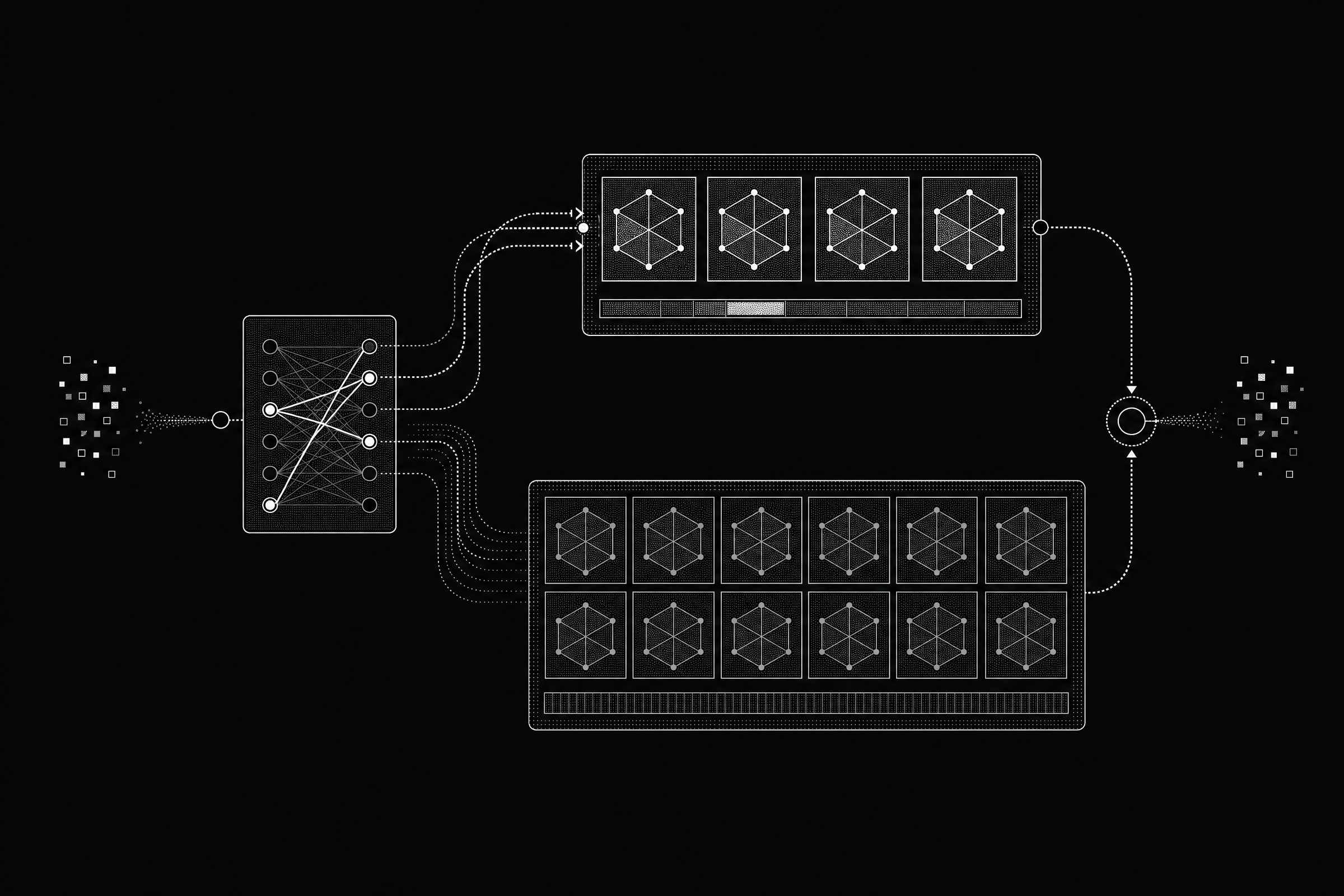
For local Qwen inference, I would measure three values before celebrating output speed: time to first token after a cold start, median output speed over representative prompts, and tail latency when a second request arrives. The project defaults to one request at a time. Raising parallelism may improve throughput, but it makes each reply slower and puts more pressure on the same memory tiers.
What I would check before deploying it
I would start with the operational boundary, not the model benchmark. A 70 GB download, 32 GB or more of RAM, and a desktop GPU rule out many laptops and nearly all managed build workers. The model can serve an OpenAI-compatible interface, which makes integration easier, but it does not solve process supervision, access control, observability, or upgrades.
I would also separate private interactive use from production service. Local Qwen inference can make sense for a single developer, a demo, or a constrained internal tool where keeping prompts on a workstation matters. It is a weaker fit for bursty traffic, multiple simultaneous users, or a workload that needs a reliable latency objective. The inference economics behind machine-native products still apply: moving work closer to the user changes where cost and failure live. It does not remove either one.
The current excitement is justified. The credible claim is not that a 125B model now fits in 12 GB of VRAM. It is that sparse models, compression, memory tiering, and speculative decoding are making a different class of local deployment worth testing. Run the same prompts you care about, log the cold and warm paths, and decide from those results.