emin@budak ~/blog % cat openai-dots-engineers.md
OpenAI Dots: The Surprising Shift for Engineers

OpenAI Dots turns the agent conversation into a long-running system with its own computer, its own permissions, and its own backlog. That is a bigger change than a new chat interface. I think the interesting question for engineers is not whether an agent can open a browser. It is whether the system can keep acting without quietly becoming an unreviewable second employee.

OpenAI introduced Dots on September 29 as always-on agents backed by a cloud computer and connected applications. The company says they can work across ChatGPT, Slack, and Teams, retain context, and pursue multiple projects in parallel. The company is starting the rollout for selected paid and enterprise plans. The announcement matters less for its product language than for the operating model it exposes.
OpenAI Dots changes the unit of work from a prompt to a continuing responsibility
OpenAI Dots is not just a chatbot that can call tools. It is designed to maintain a goal while the user is elsewhere, notice relevant changes, do bounded research, and return with work or a decision. That creates a different system shape. A request-response assistant has a short memory window and a clear human handoff. A persistent agent needs state, scheduling, a record of what it saw, and a rule for deciding when to stop.
The launch materials describe a dot as having its own cloud computer and browser. The user can inspect that computer, while the user’s own device stays separate unless explicitly connected. That isolation is a sensible starting point. It gives an engineer a boundary that can be logged, reset, and constrained. It also means OpenAI Dots is closer to a managed worker process than to a local automation macro.
This distinction matters because long-running work fails in different ways. A chat answer can be wrong and still be harmless. A system that checks mail, watches a project, or prepares documents can be wrong repeatedly. It can also act on stale context after the person who set the goal has changed their mind. The hard part is not giving an agent more tools. It is making its state and authority legible.
The useful part of OpenAI Dots is its permission model, not the autonomy headline
OpenAI Dots separates background research from account-changing action. According to OpenAI, proactive research uses connected apps in read-only mode. The product also has Custom Rules for actions that are allowed, blocked, or held for approval. Sensitive work such as changing a password remains with the user, and the company says its auto-review checks actions against instructions and safety requirements.
That hierarchy is the right direction. An agent should not have one broad permission called “manage my work.” It needs a smaller vocabulary: observe, draft, recommend, queue, submit for review, and execute. Each verb carries a different failure cost.
| Agent capability | Safe default | Why it matters |
|---|---|---|
| Read connected data | Scoped and logged | Limits accidental collection and makes access reviewable. |
| Prepare an artifact | Draft only | Lets the agent save time without speaking for the user. |
| Change an external system | Explicit approval | Creates a clear owner for consequential actions. |
| Run on a schedule | Narrow triggers and expiry | Prevents old goals from becoming permanent automation. |
This is where product demos tend to skip a step. Showing an agent order food or publish a page proves that it can cross a boundary. It does not prove that the boundary was designed well. Wired’s coverage makes the practical tension clear: Dots can gather context from connected apps and can seek approval for more sensitive actions. That is useful, but the quality of the approval depends on whether the user can understand the action, its scope, and its irreversible effects.
Engineers should treat OpenAI Dots as an orchestration problem with a user interface
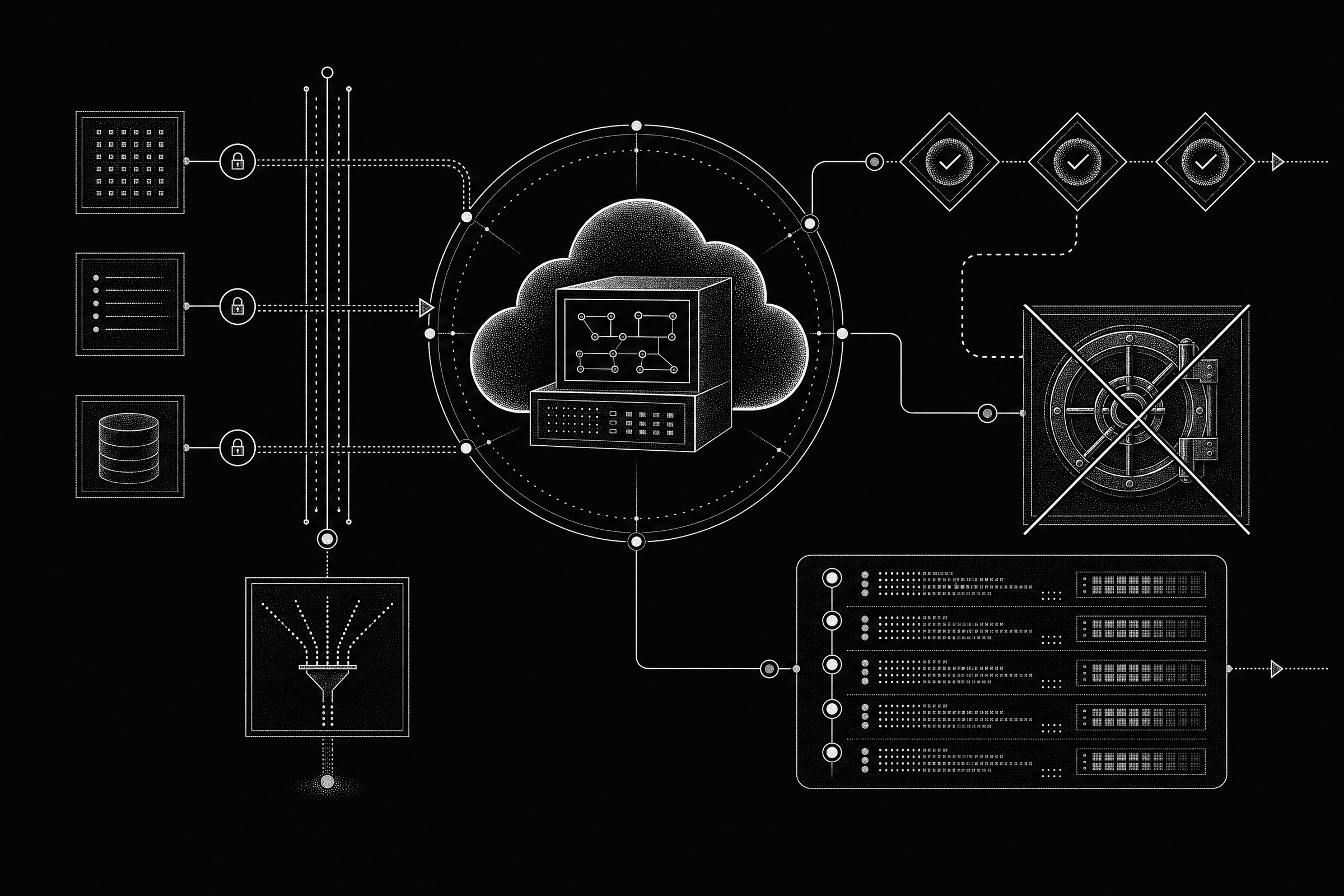
The visible interface may be chat, but the engineering work sits behind it. A durable agent needs an event store, an execution history, idempotent actions, explicit retries, and a way to surface uncertainty. It also needs a capability model that survives changes in app connections and company policy.
I would start with a simple rule: every action should have a previewable input, an accountable policy, and an observable result. If an agent creates a calendar event, the user should be able to see which source led to the suggestion, which fields will change, and whether the action is reversible. If an agent sends a message, it should show the recipient, the body, and the reason that the policy allowed it.
OpenAI Dots also pushes a familiar reliability question into consumer products: what does success mean when work runs for hours? A model response has a token-level end state. A task has a business end state. The agent needs a condition that it can check, a deadline, and a fallback when the condition cannot be verified. Without those three things, “keep working on it” turns into silent drift.
There is a useful parallel with the HTTP 402 problem. A protocol can name a capability long before the surrounding contracts make it usable. HTTP 402 Payment Required spent decades waiting for those surrounding agreements. Persistent agents may move faster, but they face the same issue. The model is only one layer. Identity, delegated authority, audit trails, and dispute handling decide whether the capability works in real systems.
The next test for OpenAI Dots is whether its controls stay precise under real work
OpenAI’s own description is careful on several points. Users choose connected apps. They can inspect activity. Background research is read-only. Sensitive actions need approval. Those are good properties, but their value depends on the details that emerge after the rollout: how granular app permissions are, how long task memory persists, what happens when a task conflicts with a newer instruction, and whether organizations can export a complete audit trail.
The broader DevDay announcement framed agents as systems that can hold ongoing responsibilities. That framing is probably right. The surprising shift is that the useful agent product may not be the one that acts most often. It may be the one that makes the fewest unjustified assumptions while it waits.
For teams building with OpenAI Dots, the discipline is straightforward: keep authority narrower than capability, make review part of the workflow, and measure task completion as a product outcome rather than a stream of convincing messages.