emin@budak ~/blog % cat net-10-update-patch-runtime.md
Does the .NET 10 Update Need an Emergency Rollout?
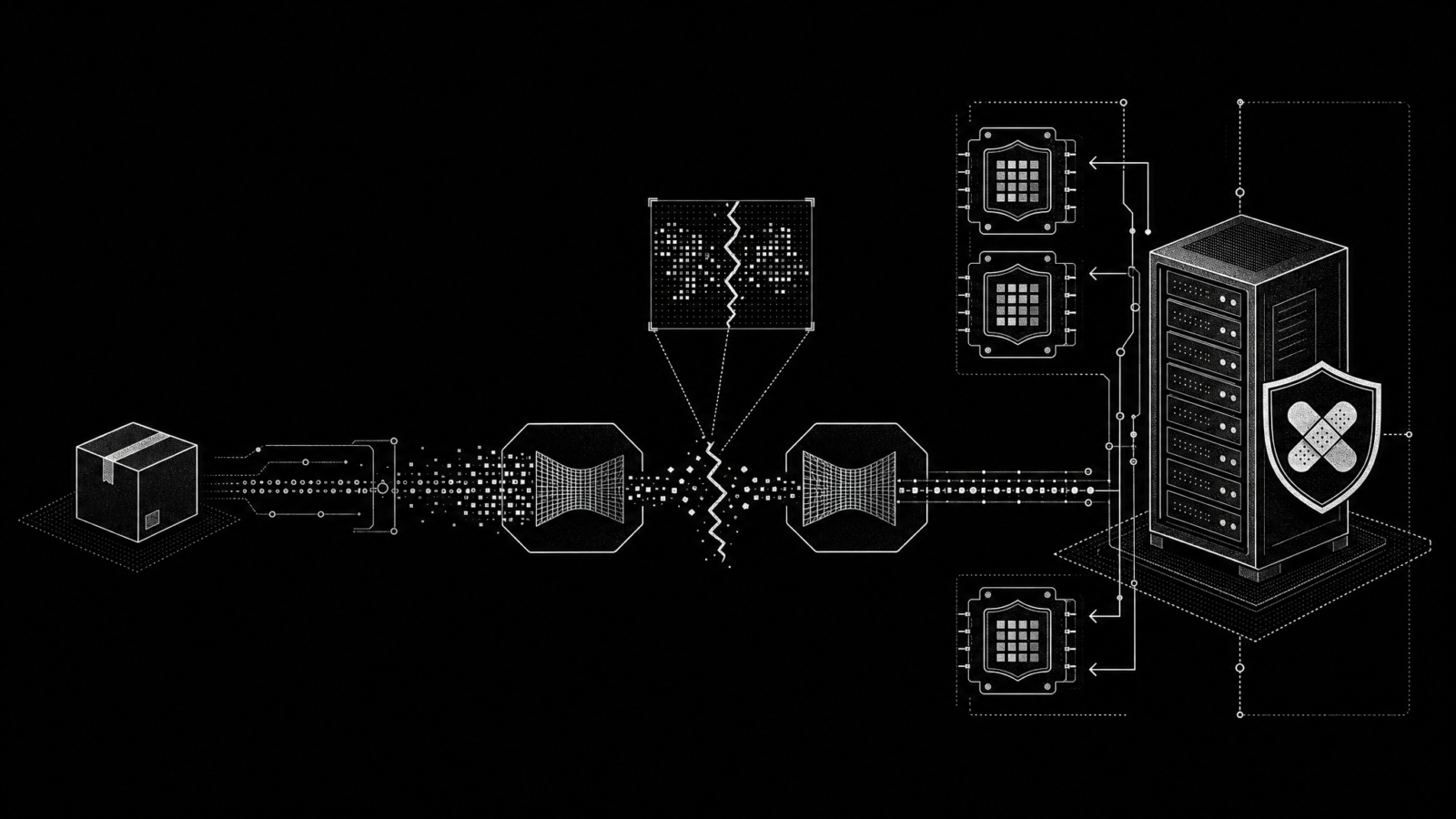
The .NET 10 update from October 25 is worth treating as an operational patch, not routine maintenance. Microsoft shipped it out of band because the October 13 release did not fully resolve two security issues, while the new package also addresses a Brotli memory corruption flaw and a Linux tarball ownership problem. The update is .NET 10.0.14, and the deployment work depends more on how an application ships than on which project file it has.
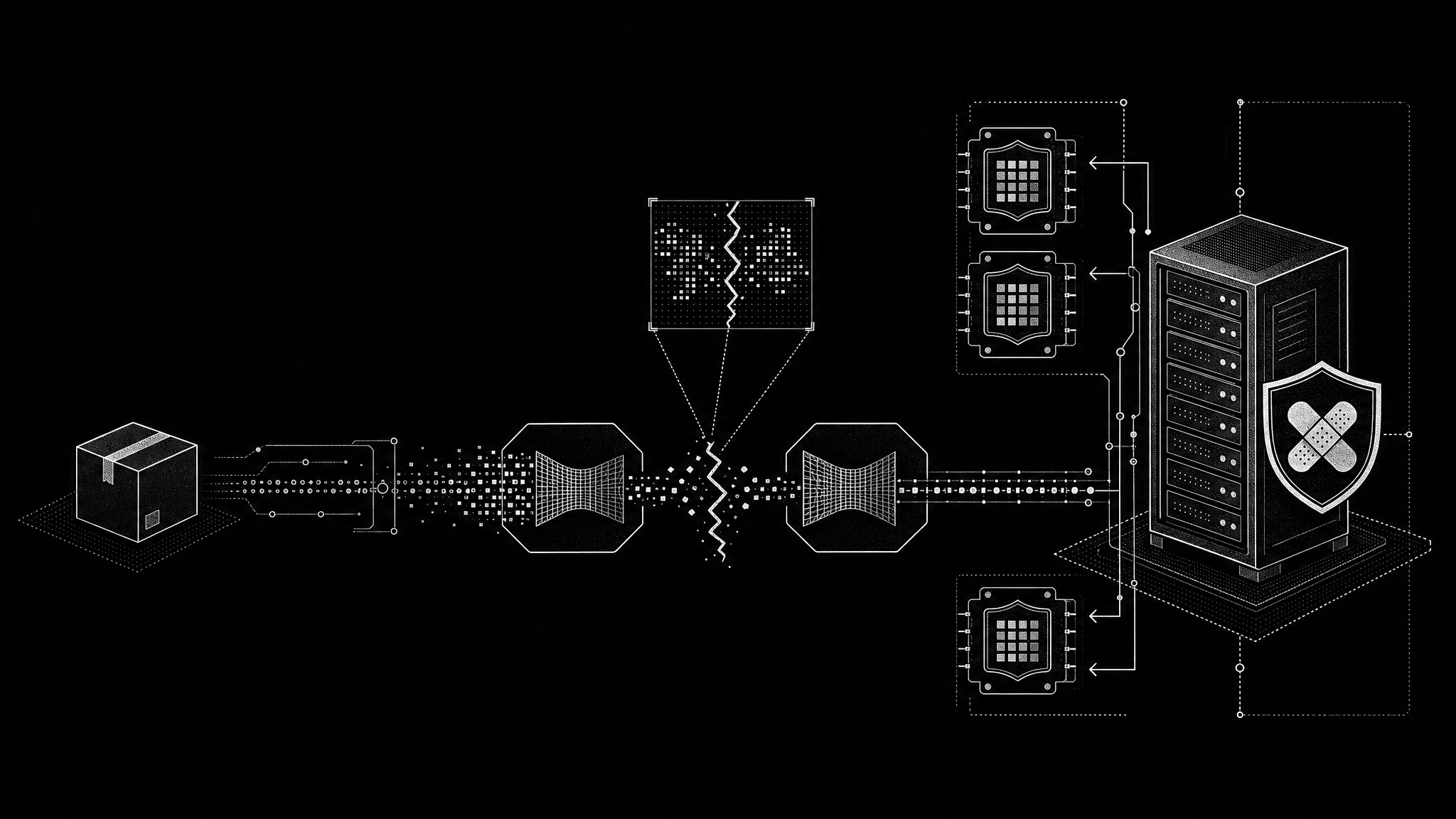
I read Microsoft’s security notice, the .NET team’s out-of-band release post, the package listing, and one independent security report. They agree on the patch versions and the broad impact. The useful distinction is less dramatic: most teams do not need to fear every .NET process, but every team needs to know whether its deployment carries its own runtime.
What changed in the .NET 10 update
The October 25 update moves .NET 10 to 10.0.14 and completes security fixes that were incomplete in the October 13 servicing release. The .NET team announcement names four CVEs in the out-of-band release.
The broadest new issue is CVE-2026-111497, a buffer overflow in .NET’s use of the Brotli decompression algorithm. Microsoft says an unauthenticated attacker may be able to read or corrupt process memory. The practical exposure is narrower than the word “Brotli” suggests. Microsoft specifically calls out ASP.NET Core request decompression, HttpClient automatic response decompression, and the System.IO.Compression Brotli APIs. Request and automatic response decompression are not enabled by default.
The other new issue, CVE-2026-114148, concerns unsafe ownership metadata in affected Linux tarballs. For .NET 10, it applies to source-build tarballs, not ordinary Microsoft-published runtime or SDK tarballs. That detail matters. A fleet that uses the normal package manager, installer, or Microsoft binary distribution should not turn a source-build warning into an unrelated incident.
Two items make the release more urgent than a normal monthly rollup. Microsoft says the previous fixes for CVE-2026-70197, involving SocketAsyncEventArgs memory corruption, and CVE-2026-102870, involving the Blazor WebAssembly debugger, did not fully address the issues. This release provides the corrected fixes. A team that installed the October 13 update is therefore not done.
Who needs action first
Teams running a framework-dependent service can start with the simplest case: install the current runtime and restart the application. The Microsoft servicing notice says that a standard Windows installation replaces 10.0.13 with 10.0.14 after a successful update. Linux and macOS teams should use the installation path that owns their runtime.
Self-contained deployments need more attention. The application bundle contains its own runtime, so updating the host does not update that bundle. The right response is to rebuild and republish against the patched runtime. The same rule applies to containers. Pulling a patched base image is only the start. The service must be rebuilt, deployed, and restarted from that new image.
The highest-priority cases are easy to name:
- Internet-facing services that accept or fetch Brotli-compressed data through an affected path.
- Blazor WebAssembly development or debugging environments that may still carry the incomplete October fix.
- Self-contained executables and container images, because host patching will not change them.
- Linux source-build environments using tarballs, where the ownership issue is relevant.
This is where the independent reporting gets one thing right: the patch list is useful, but it cannot replace an inventory of deployment artifacts. Security Online’s report also separates framework-dependent deployments from self-contained and containerized ones. Microsoft’s own guidance is the source to follow, but that split is the operational question worth putting on a change ticket.
The deployment check that decides the work
The fastest way to make this manageable is to ask one question for each service: where does its runtime come from at execution time? The answer chooses the work.
| Deployment style | Patch action | What to verify |
|---|---|---|
| Framework-dependent | Install 10.0.14 and restart | The updated runtime is present on every host |
| Self-contained | Rebuild and republish | The shipped bundle uses the patched runtime |
| Container | Rebuild and redeploy | The running image was built from a refreshed base |
| Source-build tarball | Replace affected artifacts and rebuild | Ownership metadata is not carried into the new install |
The command Microsoft recommends for a host inventory is dotnet --list-runtimes. That tells you what a machine can run. It does not prove what a self-contained executable or an already-built container includes. I would keep those checks separate in the rollout plan. Otherwise a green host inventory can hide the thing that actually serves traffic.
A useful audit has two columns. One lists the target runtime version. The other names the artifact that contains it: a host package, a release zip, a container digest, or a source-build archive. Once those columns exist, the work stops being a vague request to patch .NET. It becomes a short set of changes that can be checked independently.

The current .NET 10 download page lists runtime 10.0.14 and the 10.0.403 SDK line. Those are useful target versions for a deployment record. A record should also state whether the service is framework-dependent, self-contained, or image-based. That small piece of metadata avoids a surprisingly common half-patch.
What this update does not mean
The .NET 10 update does not make every .NET application equally exposed. Brotli processing must be on an affected path, and the Linux tarball issue has a limited scope for .NET 10. Microsoft also says .NET Framework is not affected by the Brotli issue. That is a reason to prioritize with care, not a reason to delay the update.
I would also avoid treating a version bump as evidence that a service is fixed. A framework-dependent service needs the new runtime and a restart. A self-contained service needs a new artifact. A containerized service needs a new image in production. Three delivery mechanisms, three different proofs.
This is one of those updates where the security facts are clear but the work hides in the packaging. The version is 10.0.14. The harder part is finding every place an older runtime was copied and made invisible. That boundary between an application and the platform beneath it is also why I keep coming back to the boundary work in Linux 7.3: the useful changes are often the ones that force an inventory of what runs where.