emin@budak ~/blog % cat gemini-4-argon-long-task-bet.md
Gemini 4 Argon: The Risky Long-Task Bet
Gemini 4 Argon matters less for another benchmark chart than for the product bet behind it: models should carry a difficult task across many steps without losing the thread. Google opened the model to developers and subscribers on October 13, after an earlier limited security rollout. The release puts it in Google AI Studio, Android Studio, and Antigravity.
That ambition is useful. It is also where model demos routinely outrun production reality. A coding agent that can draft a migration is one thing. A system that can keep a repository, tests, deployment constraints, and a human reviewer aligned for hours is another.
What changed with Gemini 4 Argon?
Gemini 4 Argon is Google’s new frontier model for complex software engineering, knowledge work, and cybersecurity defense. Google’s developer announcement frames the practical entry points clearly: the paid Gemini API, AI Studio, Android Studio, and the Antigravity agent platform. That makes this a developer release, not just a new chat option.
Google’s model page makes unusually broad claims about long outputs, repository-scale refactoring, and computer use. The relevant architectural claim is the million-token output budget. Long output is not automatically better output, but it changes the shape of jobs a model can attempt. It can leave room for intermediate artifacts, test runs, repairs, and an explanation of what changed.
There is a useful contrast with the recent Mistral Large 4 release. Model launches usually invite a capability comparison. Argon instead asks a workflow question: can the agent stay reliable after the first good answer?
Why Gemini 4 Argon changes the long-task conversation
Gemini 4 Argon shifts attention from one-shot code generation to task continuity. In a real engineering task, the output is rarely the hard part. The hard part is preserving decisions as evidence changes.
Consider a service migration. The agent needs to map call sites, propose a sequence, make a narrow change, run tests, interpret failures, and stop when the evidence contradicts the plan. A bigger context window helps it retain more material. It does not provide a correct plan, a safe tool boundary, or a reason to trust a green test suite that missed production behavior.
| Claim | What it can enable | What still needs engineering control |
|---|---|---|
| Long outputs | Multi-step plans and detailed change sets | Scope limits and reviewable checkpoints |
| Repository reasoning | Cross-file refactors and migration proposals | Dependency checks, tests, and rollback paths |
| Tool use | Iterative work against code and documents | Least privilege and an audit trail |
| Prompt-injection defenses | Better resistance while reading untrusted material | Isolation from secrets and irreversible actions |
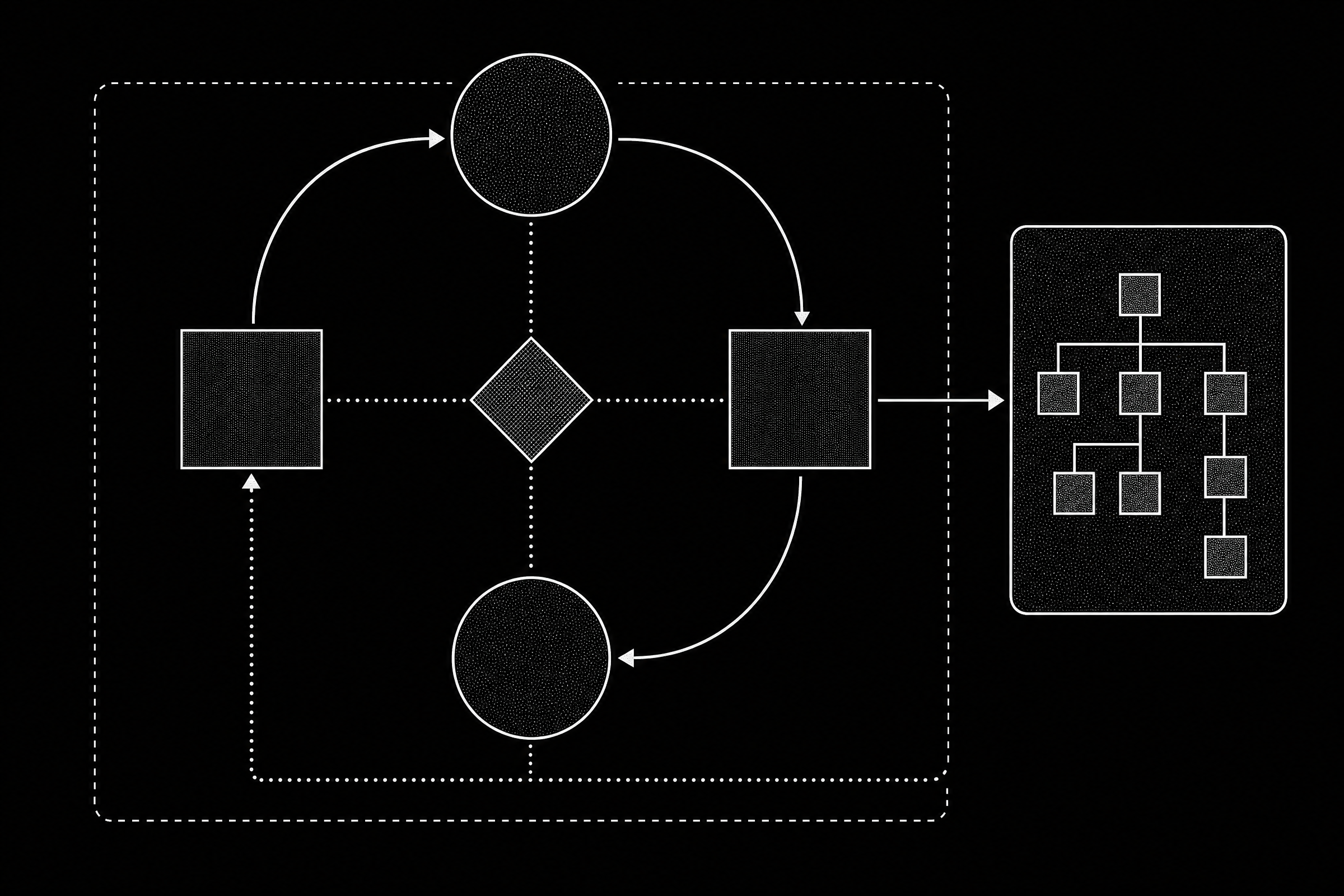
This is why I would not treat Argon as a replacement for engineering process. I would treat it as a stronger worker inside that process. The unit of autonomy should remain small enough that a person can inspect the diff, the tests, and the assumptions.
Gemini 4 Argon will be most useful when a task has natural checkpoints. A migration can pause after inventory. A test investigation can pause after reproducing the failure. A security review can pause before any suggested patch touches a live system. Those pauses turn a vague promise of autonomy into a series of claims that can be checked. They also make regression analysis possible when the model takes a wrong turn.
What the Gemini 4 Argon benchmarks prove, and what they do not
Google reports leading or tied results for Argon on several coding, knowledge-work, and cybersecurity evaluations. The published table is worth reading because it exposes the trade-off rather than presenting a single score. Argon leads Google’s listed DeepSWE result, but Google’s own comparison shows competitors ahead on FrontierSWE and Terminal-Bench in some settings.
That distinction matters. A benchmark can measure an important capability without measuring the whole job. Repository tasks depend on the issue selection, hidden test setup, tool permissions, and the cost of a bad change. A strong score is evidence that a model deserves a trial. It is not evidence that it should be allowed to merge unattended.
The coverage tells the same story from a different angle. Mashable’s launch analysis notes both the impressive published results and mismatches between vendors’ reported comparison figures. CNET’s report focuses on the wider rollout after the security-focused opening. Neither changes the sensible evaluation method: use the model on your own difficult tasks, with success criteria chosen before the run.
How I would put Gemini 4 Argon to work
I would start with work that is expensive to prepare but cheap to review. Dependency upgrades, test-gap analysis, migration plans, and incident timeline reconstruction fit that shape. Give the model a bounded repository slice, a clear definition of done, and commands that cannot deploy or alter credentials.
For Gemini 4 Argon, the first evaluation should be deliberately boring. Choose a task with a known answer or a carefully reviewed prior change. Record the prompt, the available files, the tool permissions, and the resulting diff. Repeat it with a few controlled variations. That reveals whether the model actually retains constraints, or merely produces an impressive first pass. It also exposes how much operator work the agent creates after it stops generating.
Then make the agent earn more scope. Measure the rate of useful diffs, the number of avoidable test failures, the quality of its uncertainty reports, and how often a reviewer reverses a change. Compare that against the workflow you already have, not against a benchmark chart.
For teams experimenting with agentic coding, the earlier post on local Qwen inference is a reminder that the model is only one part of the operating cost. Context, tool calls, retries, review time, and failure containment all belong in the calculation.
Argon makes the long-task bet more credible. The interesting work now is building the guardrails that let a capable model be useful without turning a large context window into a larger blast radius.