emin@budak ~/blog % cat claude-opus-5-5-game-development.md
How Claude Opus 5.5 Will Change Game Development: Eight Predictions
Opus 5.5 builds playable games from a single prompt, drives game editors through MCP and costs 20% less than Opus 5. Eight predictions for game development over the next two years, with confidence levels.
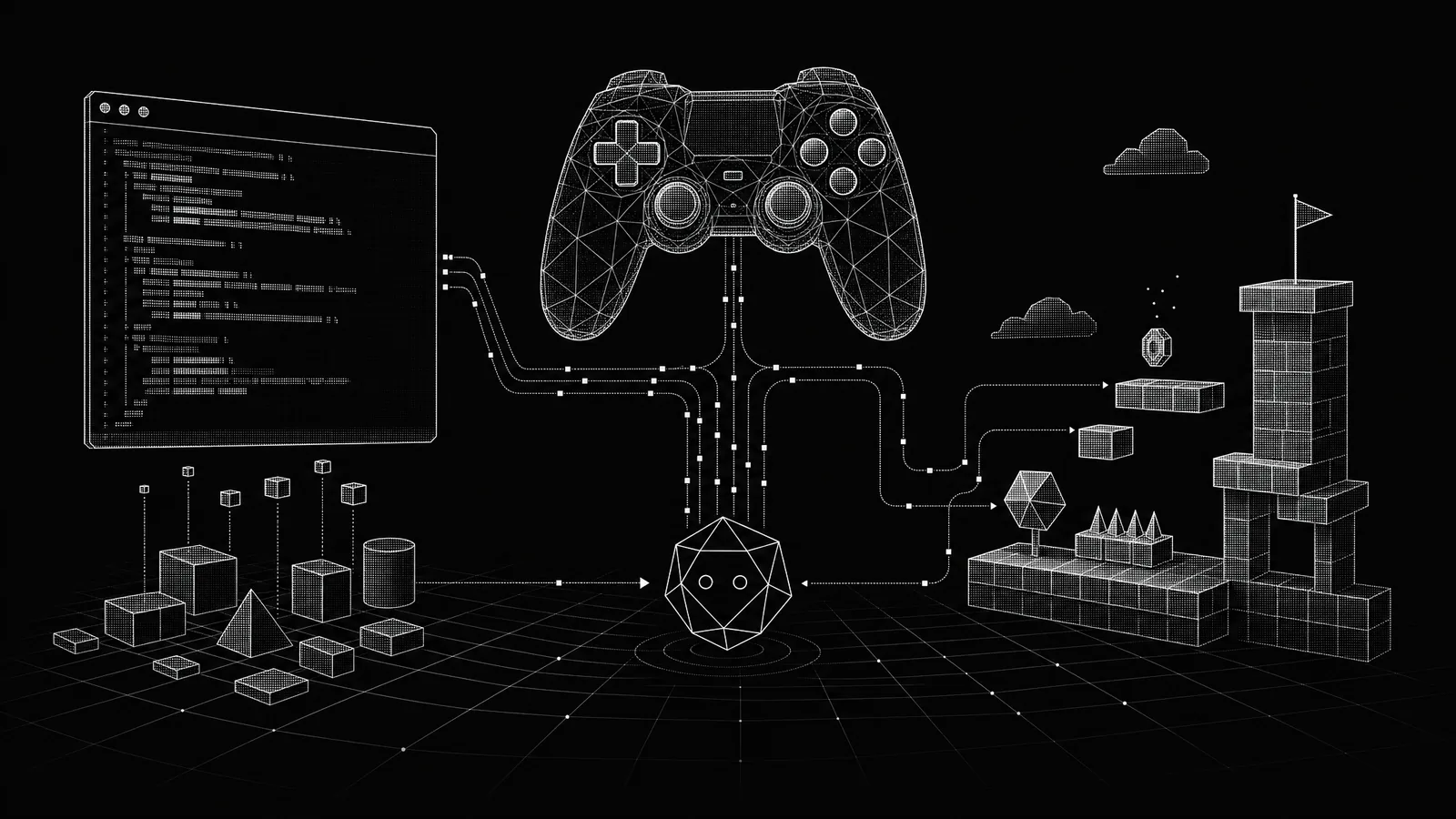
Anthropic released Claude Opus 5.5 on September 22, 2026. The headline numbers are about work, not chat: 66.4% on Terminal-Bench 4.0 against 52.3% for Opus 5, 81.8% on the OSWorld 2.1 computer-use benchmark against 74.0%, output more than 30% faster, and a price 20% lower at $4 per million input tokens and $20 per million output tokens. TechCrunch summed it up as Fable-level performance, Anthropic’s larger model, at a lower price.
One line in the announcement is about games. A tester reported that when asked to build one, Opus 5.5 “scored higher than any other model on the strength of its graphics and polish.” Within days, people were posting playable 3D browser games made from a single prompt.
A demo isn’t an industry. Games are a $213.9 billion market in 2026 by Newzoo’s estimate, reported by PocketGamer.biz, run by teams that are tired, anxious and skeptical of AI. So here is what I think Claude Opus 5.5 and models like it will change in game development over the next two years, how confident I am in each call, and what would prove me wrong. They’re predictions, and I’ve labeled them that way.
Where the industry stands
The GDC 2026 State of the Game Industry survey, answered by more than 2,300 professionals, sets the baseline:
- 36% use generative AI in their job: 30% at game studios, 58% at publishers, support and marketing firms.
- They use it for research and brainstorming (81%), daily tasks and code assistance (47% each) and prototyping (35%).
- 52% think generative AI is harming the industry, up from 30% a year earlier and 18% the year before. Only 7% think it helps.
- 28% were laid off in the past two years.
On the shipping side, Steam lists more than 17,250 games with an AI disclosure, and nearly one in five games at a recent Next Fest carried one, according to figures from the AI Transparency Index. Adoption is broad and sentiment is bad. Both shape what comes next.
Eight predictions for Claude Opus 5.5 in game development
1. Prototyping becomes the default use (high confidence)
Getting from an idea to something playable is where a model that writes code, runs it, tests it and fixes it on its own pays off first. Prototypes are thrown away, so code quality matters less and speed matters most. I expect most studios that already allow AI to have designers prototyping mechanics with an agent within a year. What would prove me wrong: prototypes built this way misleading teams more than they help, because they feel better than the real game will.
2. Agents that drive the editor become standard (high)
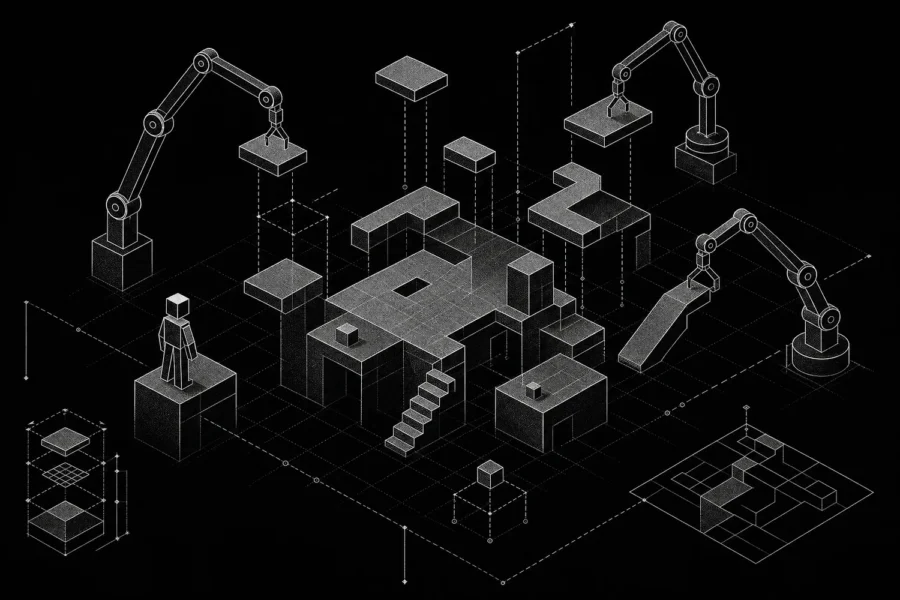
The tools are moving already. Unreal Engine 5.8, released in June, ships an experimental plugin that embeds an MCP server in the editor, so an agent such as Claude Code can spawn actors, set up lighting, create materials and run automation tests. Unity’s AI Assistant package connected the editor to agents through MCP as well, and now points developers to a command-line interface for the same job. A model that scores 81.8% on computer use and holds a long task together is the other half. By the end of 2027 I expect “let the agent do it in the editor” to be as ordinary as writing a script.
3. The biggest wins are in unglamorous work (high)
Anthropic lists long codebase migrations and bug detection among Opus 5.5’s strengths. Games are full of exactly that work: engine upgrades, platform certification checklists, build pipelines, save-file migrations, localization tooling, crash triage. None of it makes a trailer and all of it eats senior engineering time. This is where I expect the measurable productivity gains, and where the fewest people object, because nobody’s portfolio is a build script.
4. Small and web games flood the market (high)
If a playable 3D game costs one prompt and a few dollars of tokens, the supply of small games explodes, and the storefront numbers above say it has started. The scarce resource moves from making a game to getting anyone to notice it. That favors studios with communities, wishlists and marketing skill over studios with raw output.
5. In premium games, AI goes into the pipeline, not the final art (medium-high)
The people most opposed to generative AI are the ones whose work it imitates: in the GDC survey, 64% of visual and technical artists view it unfavorably. Performers have contractual protection, since SAG-AFTRA’s 2025 video game agreement requires consent and disclosure for digital replicas. Players notice generated art and punish it. So I expect premium studios to use models like Opus 5.5 to build the tools their artists use rather than to replace the art, while cheaper games lean on generated assets openly.
6. Live games put agents into operations (medium)
Live-service games run on configuration: events, store rotations, economy tuning, patch notes, support macros. An agent that can read telemetry, propose a change, write the config and test it in a staging build fits that work well. The limit is trust, because a wrong price in a live economy costs real money within minutes. I expect agents to draft and people to approve for a long time.
7. AI-native gameplay stays niche through 2027 (medium)
Characters you can actually talk to and worlds generated as you play are the exciting part, and the economics are the hard part. An illustration, with the assumptions stated: one conversation turn with 1,500 tokens of cached context and a 150-token reply costs about $0.0003 for the context at Opus 5.5’s $0.20 cache-read rate, plus $0.003 for the reply. That is roughly a third of a cent per turn and about 7 cents for a 20-turn session. A game with a million players a day, one session each, would spend around $66,000 a day on dialogue alone. Smaller models and on-device inference will close that gap, and world models such as Google’s Project Genie are improving fast, but at scale frontier models will sit behind the game rather than inside every frame of it.
8. Team shapes change before headcounts do (medium)
The first effect of a strong agent is not fewer people but a different ratio. One technical designer with an agent can now do work that used to need a designer and a gameplay programmer. Studios that use this to cut staff will run into the 52% who already think AI is hurting the industry, and a labor market that has lost more than a quarter of its people in two years. Studios that use it to ship more with the teams they have will attract the better people. I expect to see both, and I expect the second group to do better.
What I would do if I ran a studio today
- Pick one pipeline problem, not a creative one, and give an agent a real week on it: an engine upgrade, crash triage, a certification checklist.
- Connect the editor through MCP or the engine’s own agent interface in a sandbox project, and measure the time saved on actual tickets.
- Write the AI policy together with the art and audio teams, including what will never be generated, before anyone asks.
- Budget inference like any other live cost, per player and per session, before designing a feature around it.
Opus 5.5 won’t make games on its own. What it does is shorten the trip from an idea to a playable build, and it’s very good at the work nobody on a team wants to do. I think that alone changes how games get made over the next two years.